Date
Monday 24 August 2026
3.30pm - 5.00pm (AEST)
Workshop Cost
Non Member - $150
ACEL Member - $99
Combine and Save
$279
*Receive a discount when you combine your registration with a new ACEL membership
Often in inclusive education we talk about the need for adjustments for individual students. The planning and implementation of adjustments assumes that the Australian Curriculum is being implemented accurately. What happens if this is not the case? What happens if these adjustments are what is allowed for all students in relation to the Australian Curriculum? In the ACARA definition of equity, referred to as the concept of ‘On the Same Basis,’ all students are entitled to rigorous (accurate), relevant and engaging learning opportunities drawn from the Australian Curriculum and set in age-equivalent learning contexts. If the Australian Curriculum is not used rigorously this can lead to negative educational outcomes for students and overworked teachers.
During this workshop participants will explore how to ensure that the Australian Curriculum (V9.0) is used in an inclusive and rigorous manner, ensuring it is accessible for all learners. This is achieved by collaboratively defining the cognitive verbs and key terminology, discussing what the Achievement Standards require students to ‘demonstrate’ and ‘not demonstrate,’ and avoiding adding construct irrelevant variables. In relation to the Content Descriptions, teachers need to collaboratively determine the essential knowledge to be taught and skills to be modelled. If these processes aren’t present in your school, how can you ensure you aren’t working unnecessarily hard and unintentionally establishing barriers to the learning process for your students?
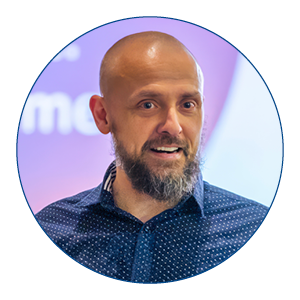
Dr Matt Capp
Dr Matt Capp (EdD) is the Director of CAPITALISE Education and a globally recognised leader in inclusive learning design, with deep expertise in Universal Design for Learning. With more than 25 years of experience across primary, secondary, and tertiary education, he has supported students with disability and diverse learning needs throughout his career. As an autistic man who also lives with Post Traumatic Stress Disorder and a hearing impairment, he draws on both his professional knowledge and lived experience to champion personalised learning for learners of all ages. He is part of a blended multicultural family and is the author of Inclusive Learning Design in Australian Schools: The CAPITALISE Education Model.